

✔ Effective layouts maximize space and support productivity.
✔ Proper furniture sizing prevents crowding and clearance issues.
✔ Flexible furniture adapts to hybrid work needs.
✔ Clear pathways and lighting improve safety and comfort.
✔ Professional planning reduces costly mistakes.
Small office space in Danbury, CT often puts pressure on every square foot, especially when workstations, storage, and meeting needs all compete for the same footprint. Without a clear layout, desks pinch walkways, clutter builds quickly, and the space can feel tight and inefficient.
Office layout also affects psychology: stress levels and staff morale can shift based on design, and a well-planned, attractive workplace signals that employee health and happiness matter, which can strengthen morale and increase job satisfaction.
Here are the 7 best office furniture layout ideas for small offices in Danbury, CT.
An open layout removes space-wasting walls and gives small teams a flexible footprint that can expand or contract as headcount changes, while zones keep the room organized and reduce distractions.
➜ Marketing firms
➜ Small tech startups
➜ Sales teams
➜ Creative agencies
Placing desks along the walls keeps pathways clear and opens the center for shared use, which is ideal for narrow Danbury office suites where traffic flow can get tight near doors and hallways.
➜ Real estate teams
➜ Insurance offices
➜ Administrative departments
➜ Customer service teams
Multi-purpose pieces reduce the number of furniture items needed, making the office feel cleaner while still supporting storage, meetings, and daily operations in limited square footage.
➜ Small tech startups
➜ Hybrid teams
➜ Project-based teams
➜ Consulting firms
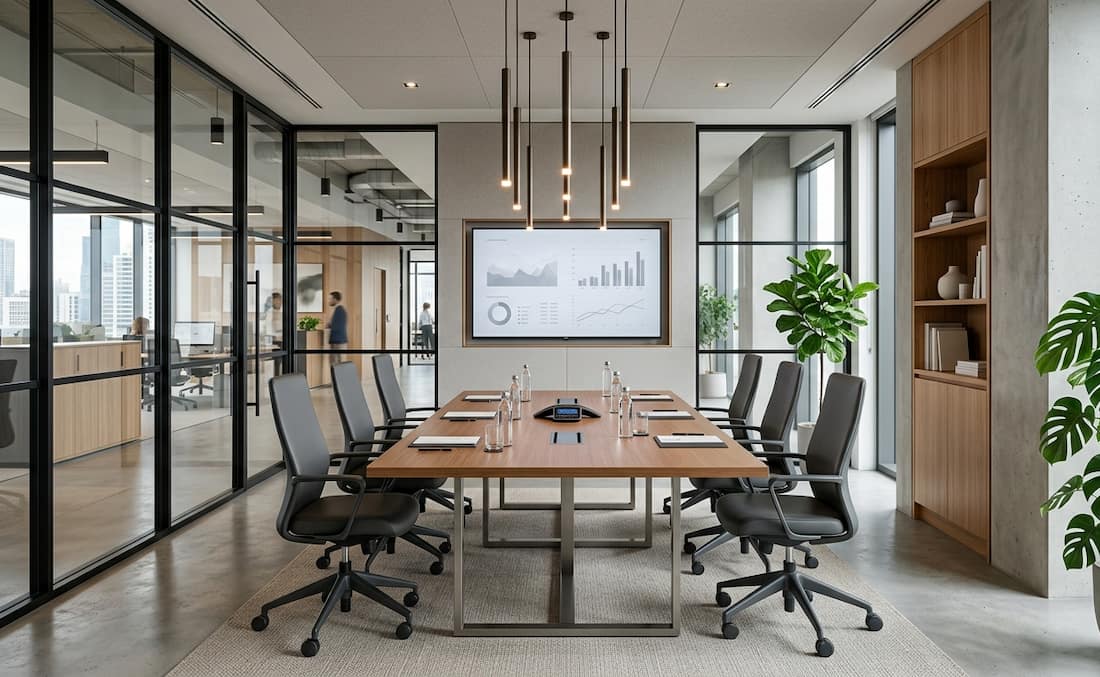
Small offices often need privacy for leadership, HR, or client calls, and glass enclosures provide that function while maintaining light flow and a more open, modern appearance.
➜ Professional services firms
➜ Legal offices
➜ Financial advisors
➜ Medical administration offices
A smaller, smarter meeting room supports collaboration without sacrificing half the office, which matters for Danbury businesses balancing client meetings and daily team operations.
➜ Sales teams
➜ Real estate teams
➜ Client-facing service businesses
➜ Teams that meet daily
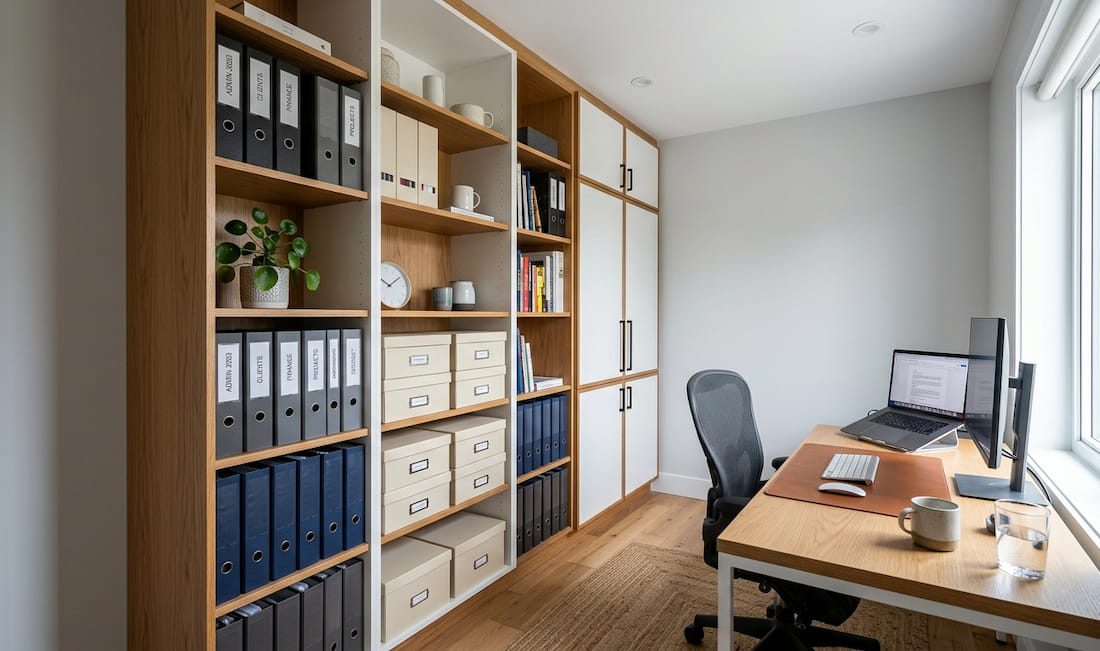
When floor space is limited, vertical storage protects productivity by reducing clutter, keeping files accessible, and preventing work surfaces from turning into storage piles.
➜ Healthcare offices
➜ Accounting firms
➜ Legal practices
➜ Offices with heavy paperwork
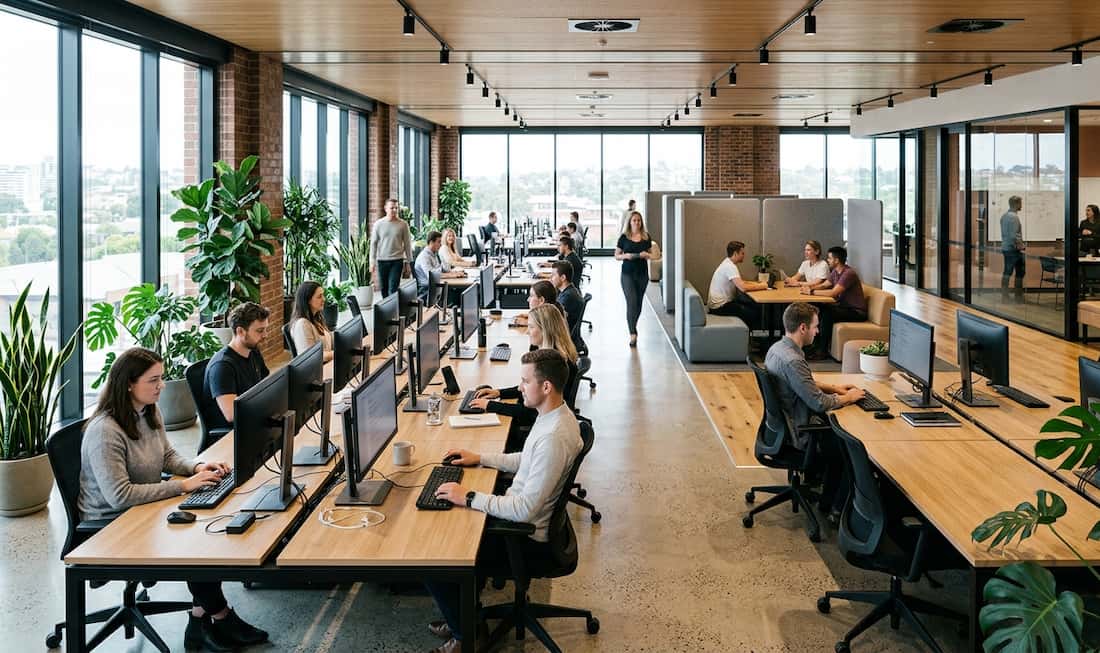
With 52% of employees working in hybrid arrangements as of November 2024, flexible seating helps small offices avoid rows of unused desks while still supporting collaboration-heavy in-office days and quieter focus days without constant reconfiguration.
➜ Hybrid teams
➜ Small tech startups
➜ Sales teams with field reps
➜ Teams with rotating schedules
Layout alone is not enough. Furniture scale, lighting, and workflow planning matter just as much.
Oversized furniture wastes space. Large desks reduce chair clearance, narrow walkways, and block window light. Use compact, commercial-grade desks, tables, and storage sized for tight footprints.
Place furniture based on how people move and work. Seat frequent collaborators near each other, keep private roles away from traffic, and position reception or meeting seating near the entry so clients do not walk through work areas.
Maintain clear circulation. Target 36-inch walkways where possible, keep exits unobstructed, and avoid placing cabinets, chairs, or equipment in travel paths. Crowded paths create safety risks and slow movement.
Do not block windows with tall storage. Place desks perpendicular to windows to reduce glare and keep light moving through the room. Use glass and light finishes to keep the space visually open.
Many businesses unintentionally reduce functionality by:
In a competitive market like Danbury, your office appearance influences:
An organized, well-designed office signals professionalism.
In tight spaces, small layout mistakes create real problems, such as blocked drawers, chairs that cannot fully extend, and walkways that feel restricted. Precision is necessary to keep the office functional.
Desks, storage, and shared equipment should be positioned based on daily tasks and movement patterns so collaboration does not interrupt focus, and traffic does not cut through work zones.
Door swings, aisle widths, corner clearances, and safety requirements must be checked before installation to ensure furniture fits properly and remains usable.
Desk height, chair support, monitor positioning, and spacing must meet ergonomic standards even in compact footprints to prevent discomfort and lost productivity.
Accurate measurements and a clear layout prevent returns, resizing issues, and last-minute furniture changes that increase cost and delay setup.
Organized delivery and proper placement ensure the office becomes operational quickly without interrupting employees or client visits.
Trends emphasize flexibility for hybrid schedules, smaller collaboration areas, integrated technology, better acoustic control, and modular furniture that can be reconfigured without redesigning the entire office.
Avoid overcrowding, mixing mismatched furniture scales, choosing finishes that show wear quickly, prioritizing looks over function, and using materials that are hard to clean or maintain in commercial spaces.
A desk placed perpendicular to the window usually reduces glare while still using natural light, while facing directly into or away from the window can create screen glare or harsh contrast depending on the room.
Spacing should allow chairs to slide back fully and people to pass behind seated users without squeezing through, so circulation stays safe and work areas stay usable.
Use a limited palette, prioritize durable and easy-to-clean surfaces, keep high-traffic areas in mid-tone finishes that hide scuffs, and align accent colors with brand identity without overpowering the space.
Efficient office layout and commercial furniture selection improve workflow, comfort, and space use. Businesses in Danbury, CT, can benefit from precise planning that supports clearance needs and a professional setup. Stamford Office Furniture provides commercial-grade solutions for businesses in Danbury, CT, including space planning, delivery, and installation.