The wrong layout can reduce productivity, compromise privacy, or limit growth.
A law firm operates differently from a software startup. A corporate headquarters has different demands than a growing tech company. The work styles, client expectations, privacy needs, and brand positioning all influence one critical decision: office furniture.
✔ Law firms prioritize privacy, executive aesthetics, and secure storage.
✔ Tech offices focus on flexibility, collaboration, and modern design.
✔ Corporate environments require scalable, structured, and durable systems.
✔ Ergonomics is essential across all industries.
✔ Space planning should guide every office furniture decision.
However, office furniture isn’t just about filling a space. It shapes productivity, culture, client perception, and long-term functionality. In Brookfield, CT, and throughout Fairfield County, businesses that invest strategically in office furniture see measurable benefits in workflow efficiency, employee satisfaction, and brand credibility.
Here’s what separates office furniture needs across law firms, tech offices, and corporate environments—and how to make the right decisions for each.
Law firms prioritize confidentiality, authority, and client trust. The physical environment must reinforce those values immediately.
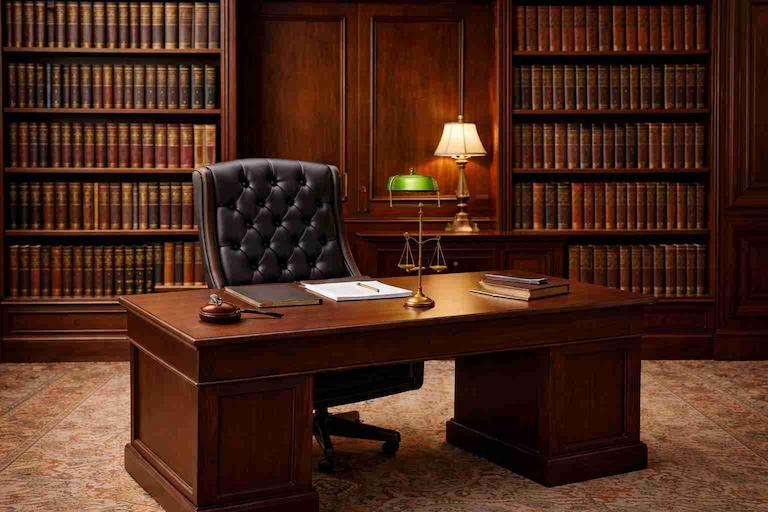
Clients often make judgments within seconds of entering an office. Law firms typically favor:
The goal is permanence and stability. Furniture should feel established, not trendy.
Unlike tech firms, law firms rely heavily on enclosed offices. Attorneys require:
Desks are usually configured in L- or U-shapes to accommodate paperwork, monitors, and client meetings.
Legal work generates documentation. Even in digital-forward firms, physical storage remains important. Key features include:
Furniture must support compliance and confidentiality standards.
Law firm conference rooms are built for negotiation, deposition, and client consultation. Furniture should support:
Everything should communicate authority and focus.
Reception furniture in a law firm is understated but polished:
The objective is confidence—not casualness.
Tech companies operate differently. Speed, creativity, and collaboration are central. Furniture must support movement, innovation, and adaptability.
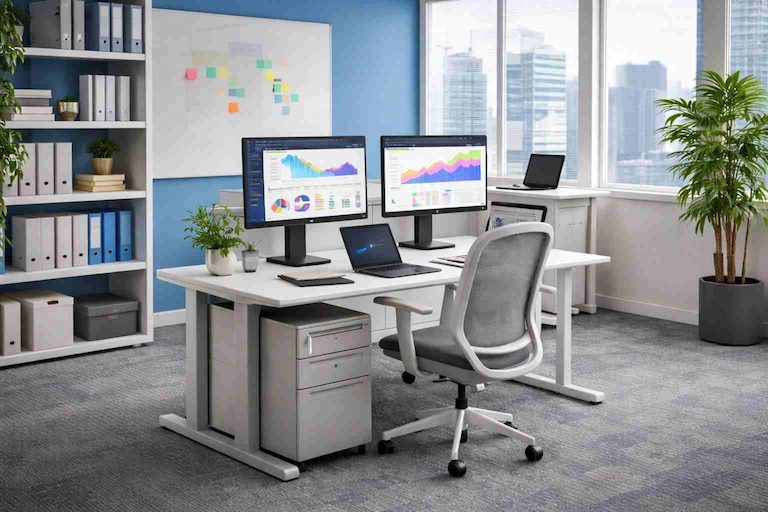
Most tech offices prioritize open workspaces. Instead of enclosed offices, you’ll find:
Furniture must allow teams to communicate easily and reconfigure when projects shift.
Tech employees spend long hours at computers. Ergonomics is a priority. Common features include:
Comfort directly affects productivity and retention.
Innovation requires interaction. Tech offices often include:
Furniture must be easy to move and reconfigure. Modular design is critical.
Unlike the formality of a law firm conference room, tech spaces may include:
The goal is speed and comfort, not hierarchy.
Tech companies often use furniture to reinforce brand identity:
The space itself becomes a recruiting tool.
Corporate offices fall between law firms and tech startups. They require professionalism but also flexibility. These environments often house multiple departments and leadership tiers.
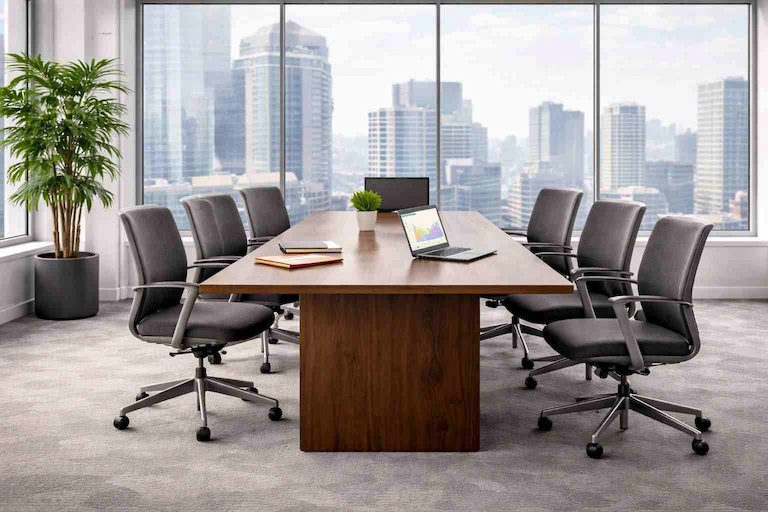
Corporate settings often include:
Furniture needs vary by role and department. Standardization helps with scalability and cost control.
Cubicles are common in corporate offices, but have evolved. Modern systems include:
The emphasis is on efficiency without feeling outdated.
Corporate offices typically balance both:
Furniture must adapt to various team sizes and meeting formats.
Unlike tech companies that lean playful, corporate environments aim for consistency. Furniture often reflects:
Consistency builds brand credibility internally and externally.
Corporate offices often purchase furniture for long cycles. Durability is critical. Commercial-grade construction, warranty coverage, and scalability matter more than trends.
If you strip it down to fundamentals, here’s how these environments differ structurally. Understanding these distinctions prevents costly mistakes.
| Feature | Law Firms | Tech Offices | Corporate Offices |
|---|---|---|---|
| Layout | Private offices | Open, collaborative | Mixed environments |
| Style | Traditional, formal | Modern, casual | Professional, consistent |
| Storage | High, secure | Minimal physical | Moderate |
| Collaboration | Formal meeting rooms | Flexible zones | Structured meeting spaces |
| Branding | Authority-focused | Culture-focused | Brand consistency |
Buying generic furniture without considering industry needs leads to problems:
Furniture must align with workflow—not just aesthetics.
Several key factors shape office furniture decisions, including storage needs, noise control, first impressions, budget priorities, and future growth. These needs differ across law firms, tech offices, and corporate environments. Planning for them properly helps avoid inefficiency and expensive changes later.
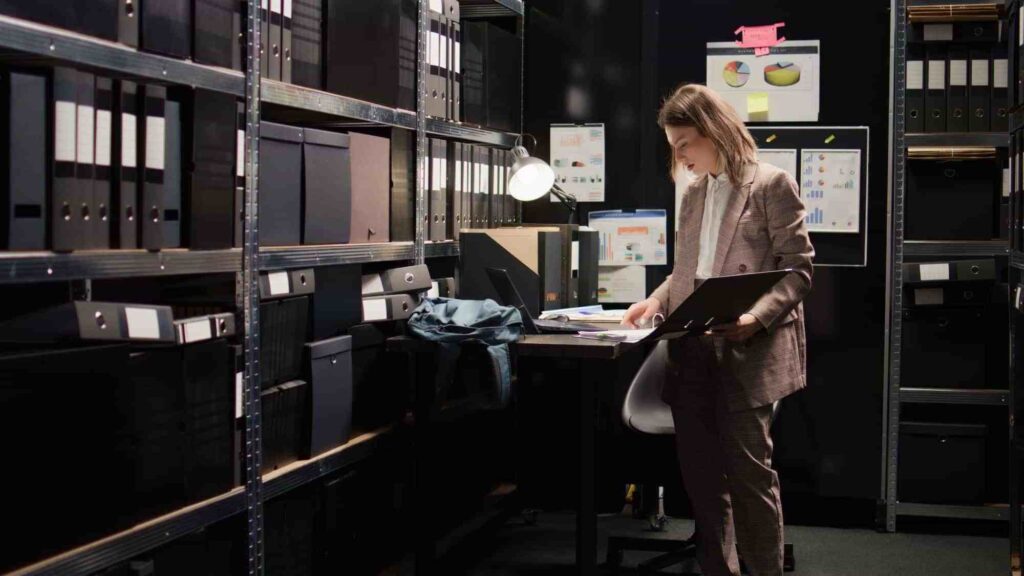
Physical storage needs differ sharply by industry, and misjudging them affects both space utilization and workflow efficiency.
Legal practices continue to rely on physical documentation, even in digital-forward operations. Secure, locking lateral files, fire-resistant cabinets, and credenzas remain essential. Storage must be both accessible and compliant with confidentiality requirements. Underestimating storage in a law firm leads to overflow, clutter, and potential security risks.
Technology companies operate primarily in cloud-based systems. Physical filing is minimal. Instead of dedicating square footage to cabinets, tech offices prioritize collaborative zones and workstation density. Storage is typically centralized and limited to shared cabinets or personal lockers.
Corporate environments sit in the middle. While many departments operate digitally, certain functions—finance, HR, compliance—still require controlled physical storage. Shared filing systems and centralized storage rooms are common, reducing the need for large individual cabinets.
Overestimating storage reduces usable workspace and increases costs. Underestimating it creates clutter and workflow disruption. Accurate assessment ensures square footage is allocated strategically.
Noise control is a functional requirement, not just a comfort feature. Each industry faces different acoustic challenges.
Confidential conversations demand soundproofed private offices and enclosed meeting rooms. Solid-core doors, high panels, and sound-absorbing materials are critical. Acoustic failure in a legal setting can compromise client trust.
Open layouts increase collaboration—but also noise. To balance this, tech environments often incorporate acoustic panels, soft seating, ceiling baffles, and dedicated quiet rooms. Phone booths and enclosed pods help employees focus during high-concentration tasks.
Corporate settings benefit from hybrid solutions. Cubicle panel systems, enclosed conference rooms, and small focus rooms reduce distractions. Acoustic privacy is particularly important in HR, finance, and executive areas.
Reception furniture communicates brand identity before a single conversation takes place.
Reception areas are structured and refined. Neutral tones, high-quality upholstery, and clean-lined seating project professionalism and stability. The environment should feel calm and authoritative.
Tech receptions often feel open and energetic. Modern lounge seating, bold accents, and informal layouts create an approachable, culture-driven first impression. The space doubles as a recruiting tool.
Corporate reception areas aim for balance. The design is polished but not overly formal. Consistent materials, organized layouts, and durable finishes reinforce reliability and brand cohesion.
Strategic allocation matters more than overall spend. Each industry prioritizes different areas.
Higher investment is typically directed toward executive offices and formal conference rooms. These areas are client-facing and central to operations. Quality, durability, and aesthetic weight justify the allocation.
Budgets often prioritize ergonomic seating, sit-stand desks, and collaborative furniture systems. Employee comfort and flexibility directly impact productivity and retention.
Corporate environments focus on scalable workstation systems and long-term durability. Standardized furniture solutions reduce replacement costs and simplify future expansion.
The key is investing where the furniture supports visibility, performance, and long-term use—not overspending in low-impact areas.
Office needs rarely remain static. Furniture should accommodate growth and restructuring.
Rapid expansion is common. Modular benching systems and reconfigurable workstations allow teams to scale without complete redesigns.
Departmental shifts, mergers, or policy changes often require layout adjustments. Modular cubicle systems and movable conference tables reduce disruption.
Growth may come through additional partners or expanded practice areas. Furniture solutions must allow for new private offices and secure storage without compromising existing workflows.
Local businesses in Brookfield and the surrounding Connecticut areas operate in competitive markets. Whether you’re a boutique law firm, a fast-growing tech company, or a regional corporate office, furniture should reflect both industry standards and local business expectations.
A well-designed office:
The wrong furniture undermines efficiency and perception.
Law firms typically need traditional, executive-style furniture with enclosed private offices. Key elements include large wood or veneer desks, ergonomic executive chairs, secure locking file storage, and formal conference tables. Privacy, durability, and a professional aesthetic are essential.
Tech companies prioritize collaboration and flexibility. Open benching systems, modular desks, and shared workspaces allow teams to communicate quickly and adapt to changing project needs. Movable furniture and height-adjustable desks also support employee comfort and innovation.
Corporate office furniture balances structure and scalability. Unlike tech offices, which favor informal and flexible layouts, corporate environments often include standardized cubicle systems, executive offices, and formal boardrooms. The focus is on long-term durability and brand consistency.
Before purchasing office furniture, businesses should evaluate:
Strategic planning prevents costly redesigns later.
Yes. Regardless of industry, ergonomic seating, adjustable desks, and proper monitor positioning improve productivity, reduce injuries, and support employee retention. Ergonomics is a universal requirement, not a luxury.
Office furniture decisions impact more than aesthetics—they influence productivity, confidentiality, collaboration, and long-term operational costs. Choosing the wrong layout or furniture system can create inefficiencies that are expensive to correct later.
Law firms, tech companies, and corporate offices each require a strategic approach based on workflow, compliance, scalability, and brand positioning. A generic solution rarely performs well across specialized industries.
For businesses in Brookfield, CT, and throughout Fairfield County, Stamford Office Furniture provides tailored workspace planning and commercial office furniture solutions designed around how your team actually works.
Contact Stamford Office Furniture today to schedule a consultation and create a workspace built for performance, privacy, and growth.