
✔ Smartly chosen office furniture can create a productive workspace on any budget.
✔ Prioritizing ergonomic chairs and desks delivers the biggest long-term value.
✔ Mixing new, refurbished, and multi-functional office furniture maximizes savings and flexibility.
✔ Thoughtful layouts—especially activity-based ones—boost efficiency and team performance.
✔ Simple upgrades like better lighting, decluttering, and DIY ergonomic fixes dramatically improve comfort.
A functional workspace involves making smart choices with the office furniture you already have and the pieces you decide to bring into your space.
Whether you’re a growing team in New Haven, outfitting a new office, or upgrading a tired layout, the right office furniture can completely change how people feel and work.
The rise of hybrid work means offices need adaptable environments. Businesses are choosing office furniture that can shift with their teams, including:
Clutter is the enemy of productivity. The minimalist trend encourages businesses to choose office furniture that supports a clean, streamlined look:
Collaboration is no longer limited to conference rooms. Offices now use designated “team zones” filled with flexible office furniture such as:
Americans increasingly want workspaces that feel grounding and natural. Biophilic elements pair beautifully with modern office furniture, incorporating:
If you’re outfitting a smaller space or transitioning to a hybrid setup, start by repurposing items you already own. Many home pieces can serve as temporary or long-term office furniture, such as:
Secondhand and refurbished office furniture offers some of the best value on the market. High-quality refurbished pieces often rival brand-new furniture in durability and appearance.
Benefits include:
More aesthetic elements—art, rugs, accessories, and decorative lighting—can be sourced more affordably without impacting productivity. Spend wisely by prioritizing the pieces employees rely on the most:
Multi-functional office furniture helps you make the most of every square foot. Look for pieces that do double (or triple) duty:
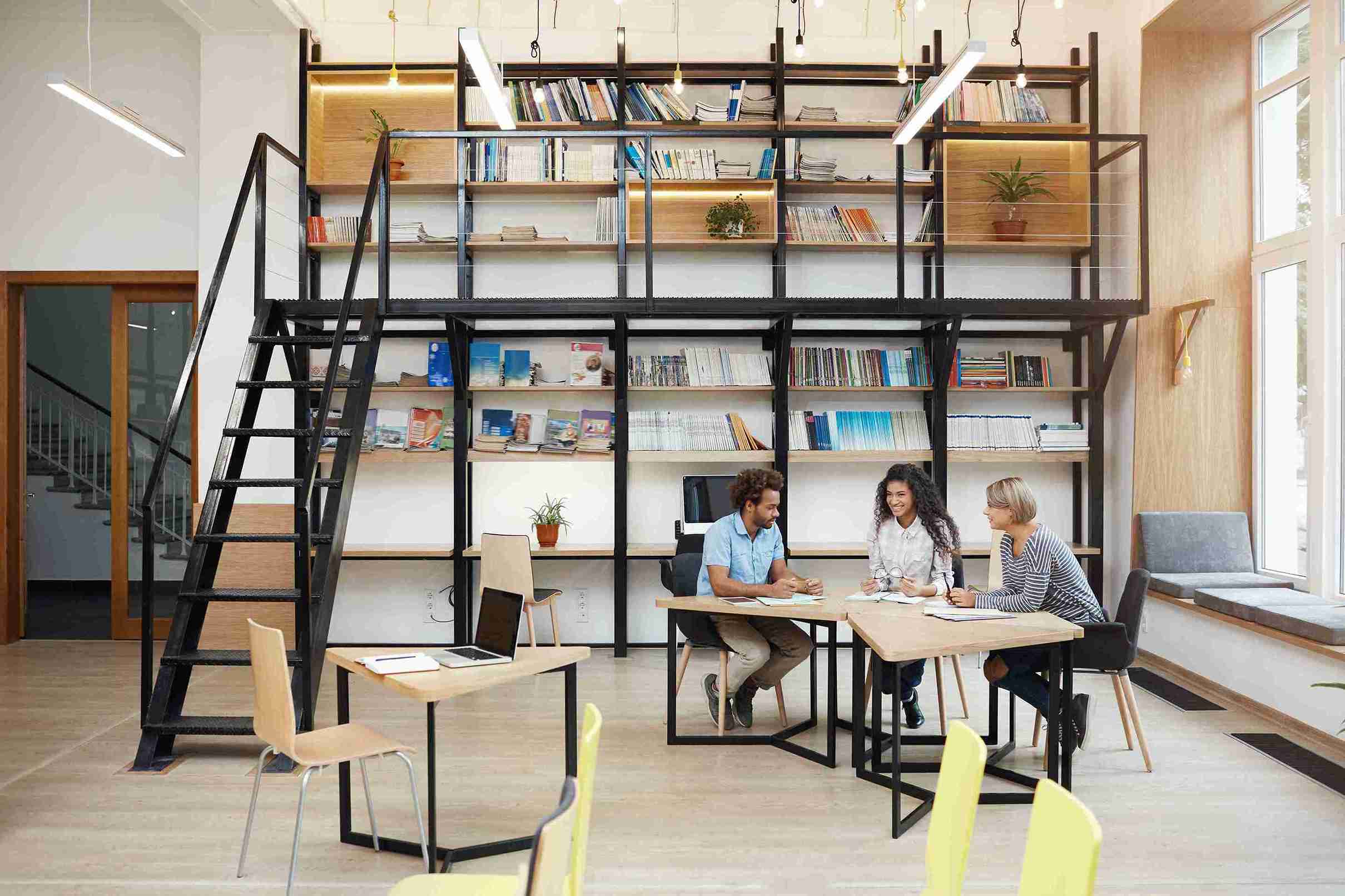
Vertical storage increases usable space instantly. This keeps office furniture arrangements open and prevents overcrowding. Use:
Clutter undermines productivity .A leaner office feels fresher, faster, and more functional. Improve flow and clarity by removing:
Cable chaos is distracting and unsafe. This small step makes a big difference in how polished your office furniture layout looks. Clean up your setup with:
Natural light boosts energy, mood, and visual comfort. Maximize any windows or skylights by:
These options are inexpensive yet make a noticeable impact. If natural light is limited, simple additions can help:
A little personality goes a long way. These touches make the office feel welcoming without overwhelming your office furniture layout. Add:
Your chair is one of the most important pieces of office furniture you own. Even if it’s not fully ergonomic, you can improve comfort by adding simple support:
Improper monitor height is a major cause of neck and shoulder strain. Fix it quickly with items you already have:
Research shows that ergonomic improvements to office furniture setups can reduce musculoskeletal discomfort by about 30%. Good posture is easier to maintain when your office furniture is arranged correctly. Check your alignment:
In ergonomics, movement matters too.
Most American businesses can outfit a productive, professional workspace by using a simple priority-based spending structure. The key is understanding where to invest and where to save without sacrificing comfort or efficiency.
A practical rule of thumb for choosing office furniture on any budget:
These are the two pieces employees use for 6–10 hours a day. High-quality, ergonomic office furniture here prevents discomfort, boosts productivity, and lasts significantly longer than bargain alternatives.
Filing cabinets, shelving, and mobile pedestals don’t require premium pricing to be effective. Durable, mid-range office furniture options will keep your workspace organized for years.
Rugs, artwork, lighting, and decorative items can be sourced affordably without impacting workplace performance.
This is one of the most efficient ways to stretch your budget. Refurbished desks, chairs, and storage pieces often look and function like new—at a fraction of the cost.
Dead space—unused corners, awkward gaps, and empty walls—can be transformed into high-function areas with the right office furniture and creative planning.
The most productive modern offices aren’t one-size-fits-all; they’re flexible, layered, and strategically furnished. Today’s top-performing companies lean into activity-based layouts—spaces designed around how work actually happens.
Different layouts support different work styles. Choosing the right one ensures your office furniture functions at its fullest potential.
Ideal for creative teams or environments where communication is constant. Best used with acoustic partitions, ergonomic seating, and clutter-free office furniture.
Perfect for roles requiring confidentiality, focus, or individual workflows (executive, legal, finance). Works well with larger desks, filing systems, and storage-heavy office furniture.
A blend of open seating, assigned desks, and flexible spaces. Most effective for modern companies balancing remote and on-site work.
Uses movable office furniture like rolling desks, modular tables, and mobile dividers. Ideal for growing teams or companies with frequently shifting priorities.
The gold standard for productivity—multiple specialized zones (focus pods, meeting areas, lounge zones, quiet rooms) supported by varied office furniture that matches the task.
Quality office furniture typically lasts 7–15 years, depending on usage and material. Regular maintenance and choosing durable pieces—especially ergonomic chairs and desks—can extend lifespan significantly.
Choose office furniture that is compact, multi-functional, and vertical-friendly, such as wall-mounted shelving, mobile workstations, and desks with built-in storage to maximize limited square footage.
Yes. High-quality refurbished office furniture is inspected, repaired, and restored to near-new condition, offering durability and professional appearance at a fraction of the cost of new items.
Simple upgrades—like adding lumbar cushions, using monitor risers, and adjusting chair height—can make your existing office furniture more ergonomic without major expense.
Wipe surfaces weekly, tighten hardware every few months, and use protective mats or coasters. Regular upkeep helps office furniture stay polished and extends its lifespan.

The right office furniture can make your workspace more organized, professional, and productive, no matter what kind of budget you’re stuck juggling. With the right strategy and support, creating a functional environment doesn’t have to be overwhelming or expensive. If you want reliable new or refurbished options that don’t torch your wallet, Stamford Office Furniture is a solid place to start exploring.