Office Supplies Vs Office Equipment: What’s The Difference?

Office Supplies Vs Office Equipment: What's The Difference?

Table of Contents

KEY TAKEAWAYS

✔ Office supplies are short-term consumables, while office equipment consists of durable, long-term assets.

✔ Properly classifying supplies vs equipment improves budgeting, tax deductions, and financial accuracy.

✔ Office equipment is considered a fixed asset that depreciates over time rather than being expensed immediately.

✔ Investing in ergonomic, efficient office equipment enhances productivity and employee comfort.

✔ Understanding the difference between office supplies vs office equipment helps businesses plan smarter and operate more efficiently.

Ever wonder why your accountant keeps asking whether that new printer is an expense or an asset? Understanding the difference between office supplies vs office equipment is smart business management. 

Whether you’re setting up a new office or optimizing your existing workspace, knowing what qualifies as office equipment versus everyday supplies helps you control costs, maximize deductions, and plan for long-term growth.

What Are Office Supplies?

Office supplies are everyday consumable items that businesses use regularly to complete daily tasks and maintain smooth operations.

When businesses talk about office supplies, they’re referring to consumable items used daily to keep operations running efficiently. These are products you buy, use up, and replace often — things like pens, notepads, sticky notes, and printer ink.

What Are Office Supplies Also Called? 

When businesses talk about office supplies, they’re referring to consumable items used daily to keep operations running smoothly. These are products you buy, use up, and replace regularly — things like pens, notepads, sticky notes, and printer ink.

Sometimes referred to as operational supplies or office consumables, these items may seem small, but they make a big difference in efficiency and organization. Without them, even the most high-tech office equipment can’t perform at its best.

Are Office Supplies 100% Tax Deductible?

Generally, yes. Office supplies are 100% tax-deductible in the year they’re purchased since they’re used up quickly and don’t retain value over time. This makes them short-term business expenses rather than long-term investments.

However, it’s important not to confuse supplies vs equipment when filing taxes. Larger purchases like computers or copiers might fall under office equipment, which is depreciated over time instead of fully deducted in one year.

How Office Supplies Contribute to Workplace Efficiency

Efficient workplaces rely on accessible, well-organized supplies. Imagine an office without pens, notepads, or printer paper — even the best technology would come to a standstill. Keeping essential supplies stocked supports smoother operations and ensures your employees can focus on what really matters: getting work done.

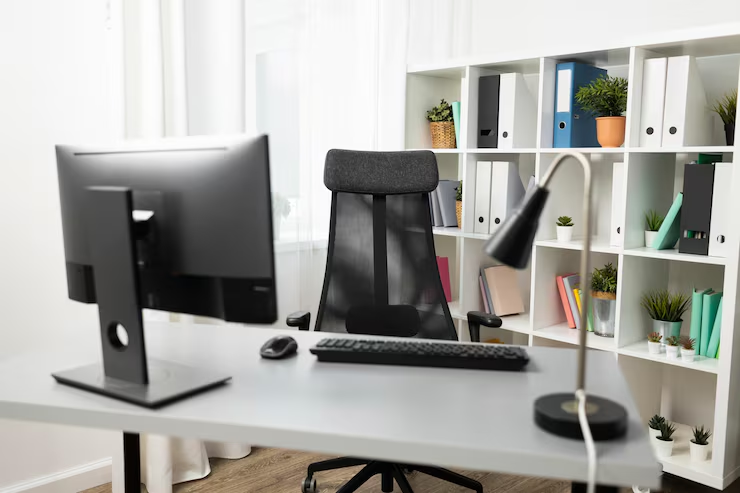
front view office desk

What Is Office Equipment?

Office equipment refers to durable, long-term assets used to support daily business operations — including furniture, technology, and essential workplace tools.

Office equipment forms the foundation of a productive workplace. These items are often discussed in accounting because businesses need to know whether office equipment is an asset that can be depreciated over time or simply an expense.

Is Office Equipment an Asset?

Yes — office equipment is an asset. It’s considered a fixed asset in accounting because it provides value for more than one fiscal year. Examples include computers, printers, office furniture, and other durable items your business depends on daily.

Unlike office supplies, which are short-term, office equipment represents a long-term investment. It’s recorded on your balance sheet and depreciated over time, allowing businesses to spread the cost across multiple years.

What Are the Three Types of Office Equipment?

Most office equipment falls into three main categories:

  • Office Furniture: Desks, ergonomic chairs, filing cabinets, and workstations that shape the workspace layout.
  • Technology and Electronics: Computers, printers, phones, and routers that power your daily operations.
  • Utility Equipment: Items like shredders, copiers, and projectors that support office productivity.

At Stamford Office Furniture, we help New Haven businesses choose equipment and furniture that balance function, comfort, and style.

What Is the Most Important Piece of Office Equipment?

While every office has unique needs, most professionals agree that computers and ergonomic chairs are the most essential office equipment. Computers handle daily operations, while chairs and desks affect comfort, health, and efficiency.

That’s why businesses in Connecticut rely on Stamford Office Furniture — we specialize in durable, ergonomic furniture that transforms how teams work and feel every day.

Office Supplies vs Office Equipment: Primary Distinctions 

While both are essential for a functional workplace, office supplies vs office equipment differ in purpose, lifespan, and accounting treatment. Understanding these distinctions helps businesses make smarter financial decisions and maintain organized budgets.

Durability

Supplies are temporary and replaced frequently, often lasting only weeks or months. Equipment, on the other hand, is built to withstand years of consistent use. A box of notepads might last a month, but a printer or desk could serve your team for years.

Accounting

From an accounting standpoint, supplies vs equipment are treated differently. Supplies are expensed immediately because they’re consumed quickly. Equipment is capitalized — recorded as a fixed asset — and depreciated over its useful life, spreading the cost across multiple years. In other words, yes, office equipment is an asset, and it must be tracked accordingly in your balance sheet.

Cost

Supplies are typically low-cost, recurring purchases that add up over time. Office equipment, while requiring a higher upfront investment, offers long-term value and measurable returns in productivity, comfort, and efficiency.

Purpose

Supplies support day-to-day operations — they keep your office running smoothly. Equipment establishes the foundation of those operations, enabling communication, organization, and workflow across your entire business.

Maintenance

Supplies simply need to be replenished when used up. Equipment, however, requires regular maintenance, software updates, or occasional repairs to maintain performance and extend its lifespan.
Examples of Supplies vs. Equipment

Understanding what counts as office supplies vs office equipment can sometimes be tricky — especially when certain items seem to fit in both categories.

Office Supplies

These are the small but mighty items that power your team’s daily workflow. Though inexpensive, they’re vital for organization, communication, and efficiency.

  • Pens, pencils, and other stationery: Everyday writing tools used for taking notes, labeling, and documentation.
  • Paper, notepads, and sticky notes: Essential for brainstorming, meetings, and reminders.
  • Ink and toner cartridges: Necessary for printing and copying; used frequently and replaced often.
  • File folders and binders: Keep important documents organized and easy to access.
  • Coffee and cleaning products: Support office upkeep and employee morale by maintaining a clean, energized workspace.

Office Equipment

Equipment represents long-term investments designed to last for years and improve workflow, comfort, and communication.

  • Computers and laptops: The backbone of modern business operations; essential for nearly every task.
  • Printers, copiers, and scanners: Enable document management and sharing across departments.
  • Telephones and network routers: Keep your office connected internally and externally.
  • Shredders and projectors: Improve security and enhance presentations or meetings.
  • Desks, chairs, and other furniture: Create ergonomic, comfortable environments that promote productivity and professionalism.

Why the Difference Between Office Supplies vs Equipment Matters

Understanding office supplies vs office equipment is more than a matter of terminology — it affects your bottom line. Properly categorizing purchases helps you:

  • Track expenses more accurately: Knowing what qualifies as a recurring expense versus a capital asset helps maintain cleaner financial records and more predictable cash flow.
  • Maximize tax deductions: Supplies can often be deducted in the same year, while office equipment may qualify for depreciation or Section 179 deductions, providing additional long-term tax benefits.
  • Manage depreciation and budgeting: Treating durable assets like desks, computers, and printers as equipment helps you plan for replacement cycles and allocate funds for future upgrades — especially since computers and similar office devices are typically depreciated over five years under standard tax classifications for office equipment.
  • Plan upgrades strategically: Understanding how long your equipment is expected to last allows you to invest wisely — upgrading when it adds the most value rather than replacing items prematurely.

When you treat your office equipment as an investment — not just a purchase — you set your business up for long-term efficiency and savings. This distinction also prevents costly mistakes during audits or end-of-year accounting.

How to Choose the Right Office Equipment for Your Workplace

Selecting the right office equipment goes far beyond price tags — it’s about aligning your workspace with the way your team operates. The right setup can boost productivity, morale, and efficiency across your entire organization.

Here’s what to consider before making your next purchase:

  • Team size and workflow needs: Choose equipment that supports how your employees work. For example, small teams may benefit from all-in-one printers, while larger offices might need dedicated copiers or shared network storage solutions. 
  • Ergonomics and comfort: Investing in ergonomic furniture — adjustable chairs, sit-stand desks, and supportive accessories — not only enhances comfort but also reduces fatigue and improves long-term employee well-being.
  • Efficiency and technology: Opt for office equipment that incorporates modern, energy-efficient features. Smart printers, wireless routers, and integrated communication systems reduce energy costs and help teams stay connected across departments.
  • Longevity and support: Look for equipment with reliable warranties, accessible replacement parts, and strong manufacturer support. This ensures you get the best return on your investment over time.
  • Aesthetic and space optimization: For client-facing offices, your furniture and technology should also reflect your brand’s professionalism. A well-designed layout using coordinated desks, chairs, and storage solutions can make a lasting impression.

Stamford Office Furniture offers expert guidance and quality furniture solutions for businesses in New Haven, CT. We’ll help you build a workspace that enhances productivity and professional appeal.

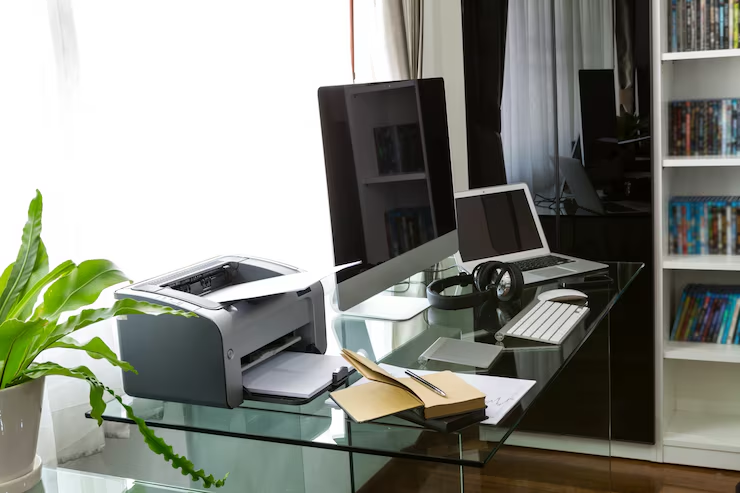
office with computer glass table

Frequently Asked Questions (FAQs)

How can proper office equipment improve employee productivity?

High-quality office equipment—such as ergonomic chairs, adjustable desks, and efficient printers—enhances comfort, reduces downtime, and streamlines workflow. Investing in durable equipment supports focus and overall workplace satisfaction.

When buying office equipment, consider durability, warranty, energy efficiency, and compatibility with your current systems. Also, think about scalability—choose items that can grow with your team’s needs over time.

Digital tools like software subscriptions are typically classified as office supplies, since they’re renewed periodically. However, physical hardware such as computers or monitors is considered office equipment because it’s a long-term asset.

Understanding supplies vs equipment helps businesses plan short-term and long-term budgets more effectively. Supplies represent recurring expenses, while equipment requires upfront investment but provides extended value through depreciation.

Regular cleaning, software updates, and professional servicing can extend the lifespan of office equipment. Creating a simple maintenance schedule ensures your technology and furniture continue performing efficiently year after year.

Elevate Your Workspace with Stamford Office Furniture

When it comes to supplies vs equipment, remember this simple rule: Office supplies keep your operations moving — office equipment keeps your business growing.

For a workspace that’s efficient, comfortable, and built for long-term success, invest in quality office equipment that performs as hard as you do.

Ready to elevate your workspace? Visit Stamford Office Furniture to explore ergonomic chairs, durable desks, and innovative office solutions designed to transform how your team works — right here in New Haven, CT.