What to Avoid When Cleaning Veneer Furniture
Proper care for veneer surfaces means knowing what not to do is just as important as knowing the right cleaning techniques. Veneer wood is thin and delicate, and the wrong product or method can cause damage that’s difficult—or even impossible—to repair.
Here are the top mistakes to avoid:
Harsh Chemicals
Cleaners containing bleach, ammonia, or strong solvents can quickly strip away the protective finish on veneer surfaces. While these products may promise a sparkling clean, they often leave behind discoloration, streaks, or even peeling finishes. Once the top layer is damaged, the veneer underneath is exposed and much harder to maintain.
Excessive Water
Veneer is especially vulnerable to moisture. Too much water can seep beneath the thin wood layer, weakening the adhesive that holds it in place. The result? Swelling, bubbling, or peeling that makes the surface uneven and unattractive. Even a small amount of standing water, such as a spilled drink not wiped up promptly, can cause long-term damage.
Abrasive Materials
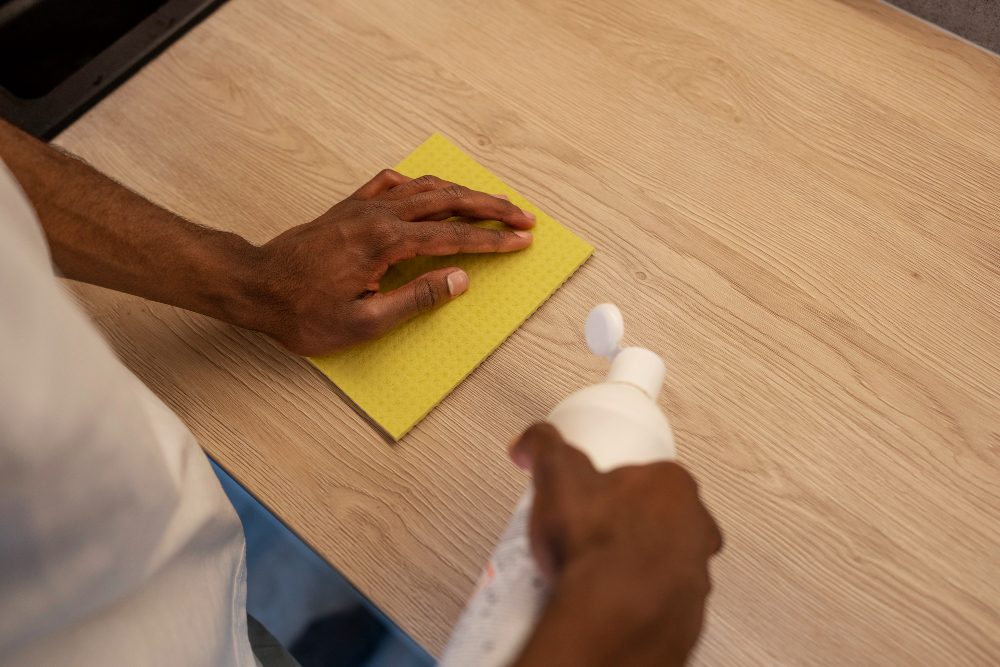
It may be tempting to reach for steel wool or a scrub pad when dealing with tough spots, but these materials are far too harsh for veneer. They create fine scratches that dull the shine and weaken the finish over time. Even paper towels can sometimes leave tiny abrasions. Soft microfiber cloths are always the safest option.
Wax-Based Products
Wax polishes may give furniture a quick shine, but over time, they build up a cloudy, sticky residue. Instead of enhancing the appearance of the veneer, this buildup makes it look duller and attracts dust. Plus, once wax residue settles in, it can be difficult to remove without damaging the finish.